


There is no sound in space, but there is music (and genomes)
Moon above
All the secrets I've told
When we're alone
Down here
I'm always lonely
When you're gone
— Down Here / Moon Above, Flunk (History of Everything Ever)
Why don't we send this music to space? What do you say?
imagination in space
Flunk has always had a special place in my heart. When I became involved in the Sanctuary Project — a kind of love letter to the Universe — I saw a way to say thank you to by favourite band.
So I invited them to come with me to somewhere distant and cold.
contents
The Sanctuary Project is a Lunar vault for humanity, inspired by projects like the Golden Record and engraved on ten 10 cm sapphire discs. The discs include math, science, maps, poetry, art and a couple of jokes.
Oh, and a backup of our species. Push to reboot.
A couple of years ago, I reached out to Ulf Nygaard, the principal and founder of Flunk, and invited him to contribute a song to Sanctuary. Something that would sound great on the Moon.
“I'll make something perfect”, he said.
And then he did.

I sat down for drinks with Flunk in Oslo. We celebrated Hitchmas. Make it a double — we were going to go to the Moon.
“Ulf, why is this album called Chemistry and Math?” I asked about Flunk's latest album at the time. And perhaps one with the most unusual title.
I will never forget his answer.
“Sitting in a cafe, I saw two people crossing the street from opposite sides. As they passed each other in the middle, they recognized each other and started talking.”
“In the end, it's just chemistry and math.”
To me, this was the Mariana trench of deep romantic statments. I knew then Flunk was the perfect match for this project.
Ok, I knew thew before too.
On May 28th, Flunk released their new album History of Everything Every and Track 1 is Down Here / Moon Above.
While the original plan was for the song to make it to the Moon before its debut on Earth, this didn't quite happen. We're still working on the Moon angle.
Yes, I do science and make art and I love Flunk, but what does all this have to do with me.
Well, four of the Sanctuary discs contain the backup for humanity: fully sequenced genomes of a woman and man. The individuals were randomly and anonymously selected from our Healthy Aging Study lead by Dr. Angela Brooks-Wilson. The DNA was sequenced at Canada's Michael Smith Genome Sciences Center.

I designed and created the content for these discs, which not only include the genomes but also the proteome (gene protein sequences) and the chemical structures of associated metabolites. The genomes include about 10 million SNPs to represent all our variation (imagine me waving my hands around at this point). The SNPs are encoded inline with the sequence, so you do not actually know what the original sequenced genome was — at each position of variation you have a choice of bases.
The discs also contain art and snippes of culture (some pop and some not). It's basically a giant cosmic Easter egg.
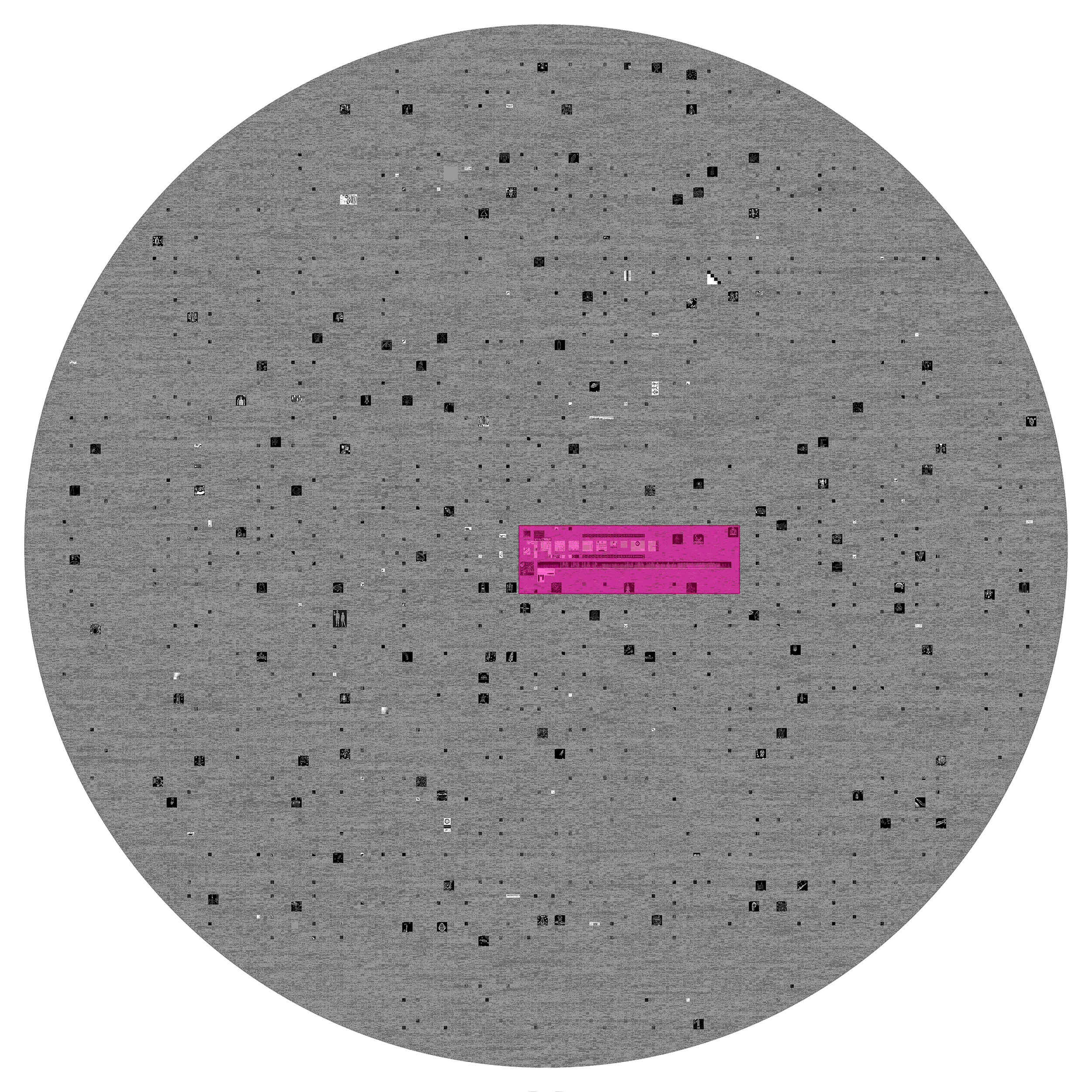
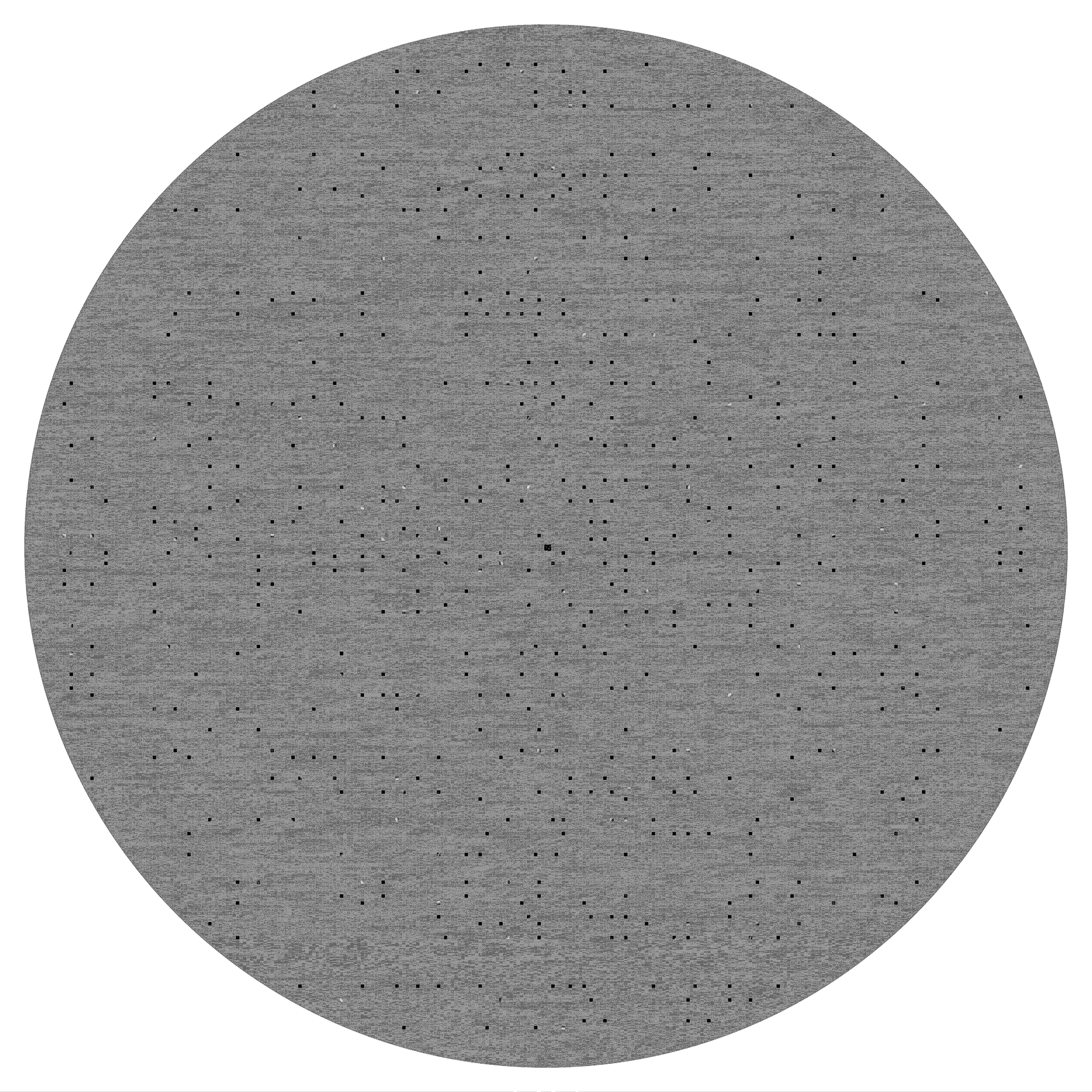
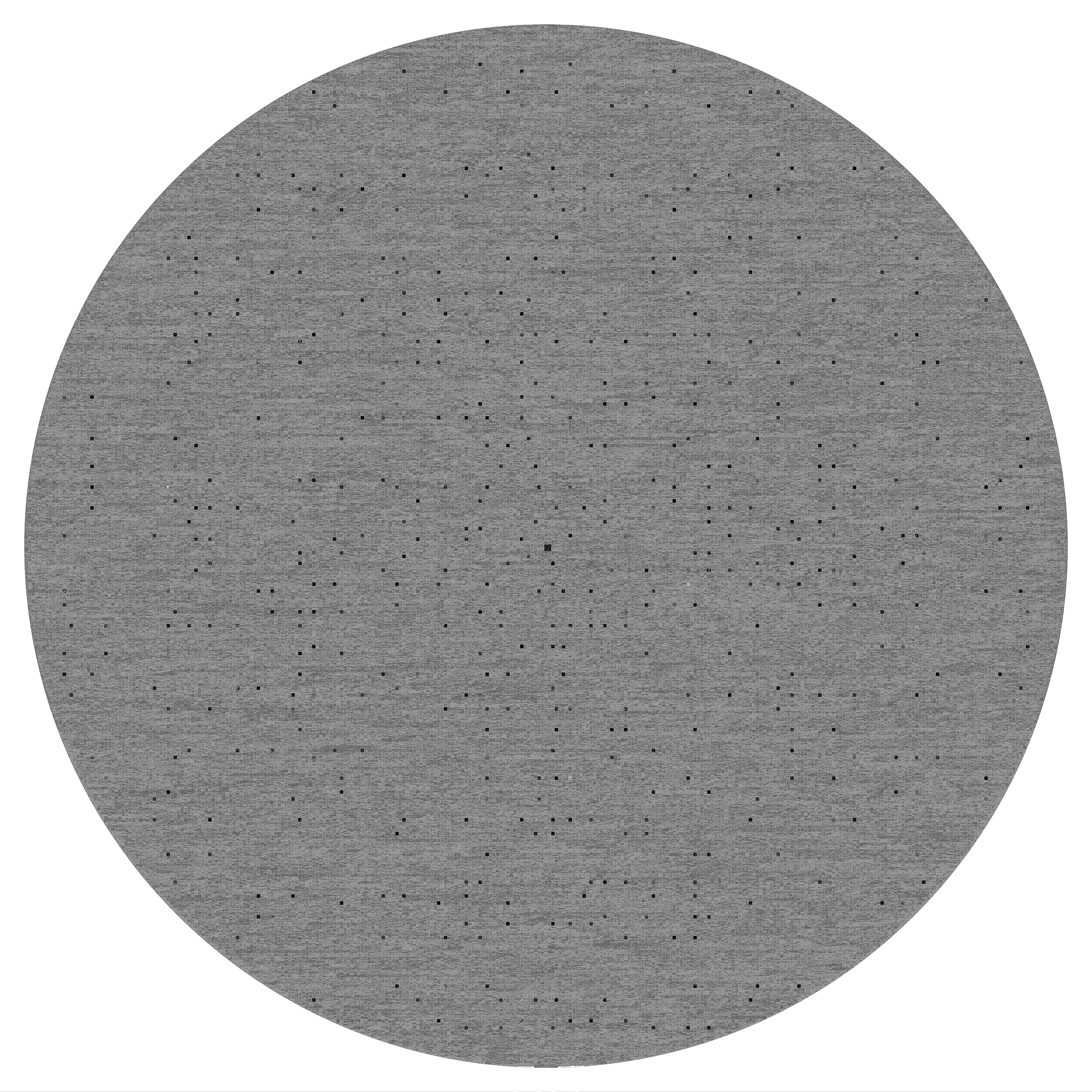
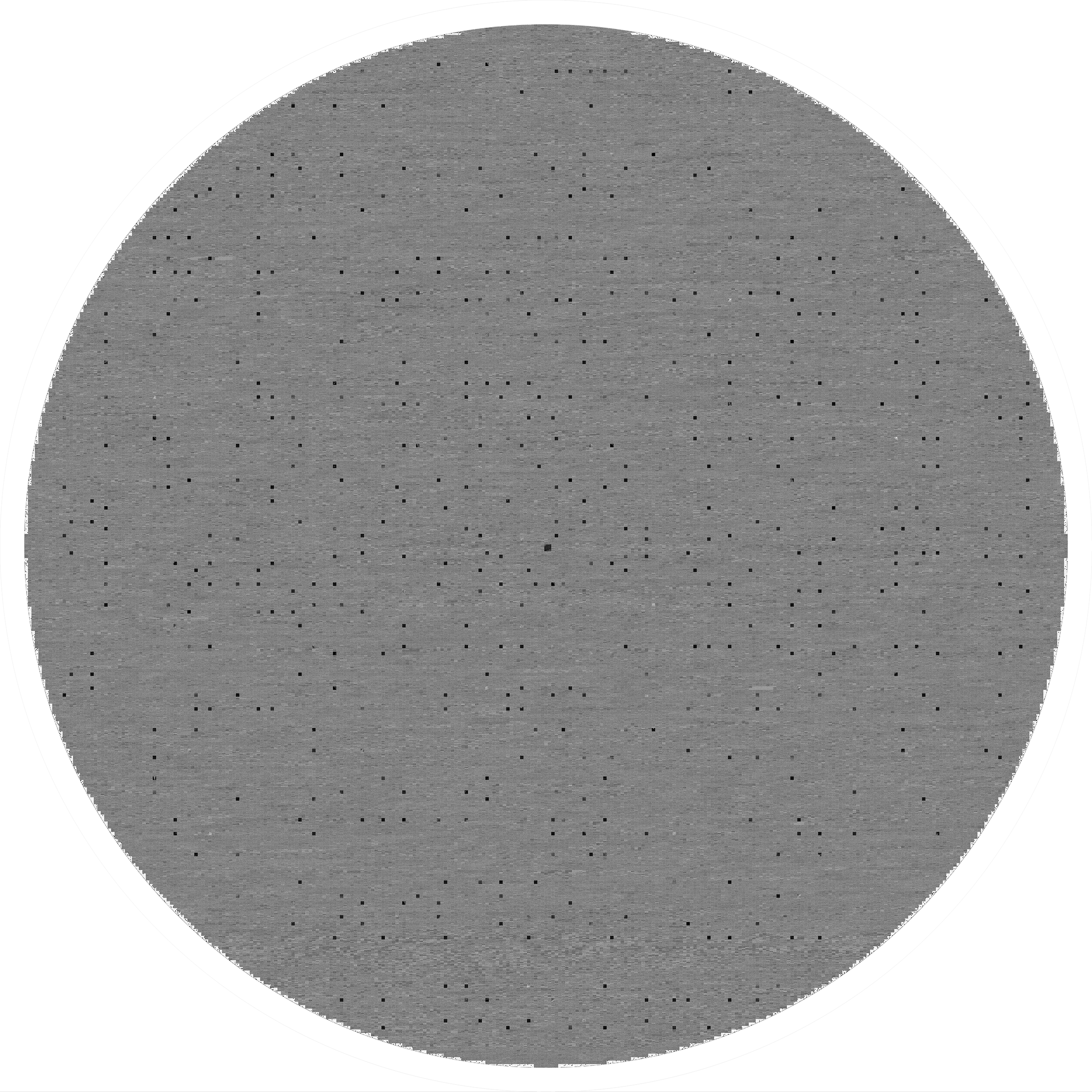
Each disc is a 10 cm diameter sapphire wafer containing 3 billion 1-bit pixels.
They're thermodynamically inert and will last forever. Roughly speaking.
You can pixel-peep and browse each of the discs.
To me, these discs are a love poem to the Universe. Or a post card — I love post cards.
The four genome discs look like this.
You know you're done reading when you get to the end.
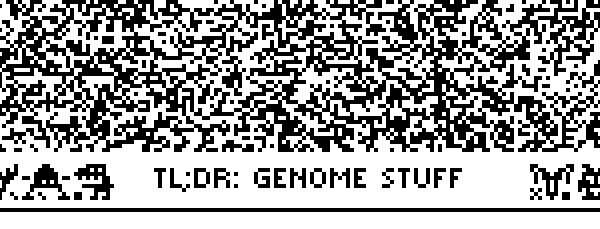
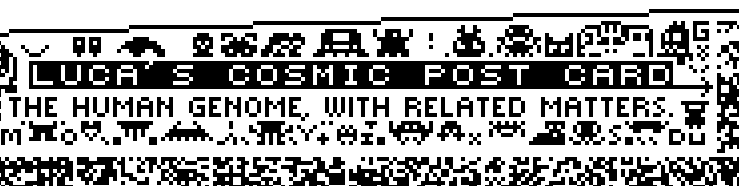
The first disc, which contains roughly the first half of the female genome, also contains instructions for decoding, along with a few of our learned lessons (Nuremberg Code and Declaration of Helsinki) that remind the reader not to experiment carelessly with the information.
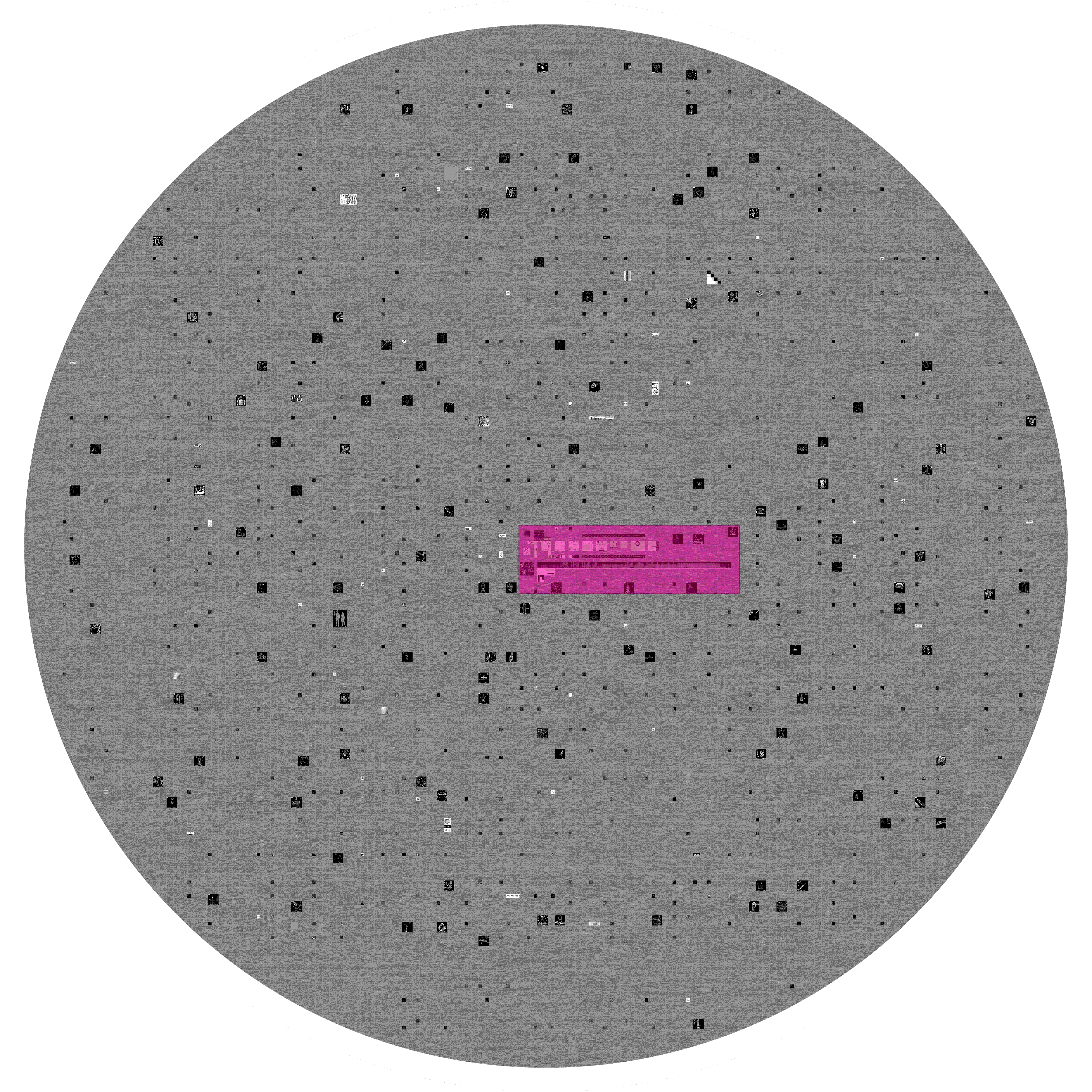
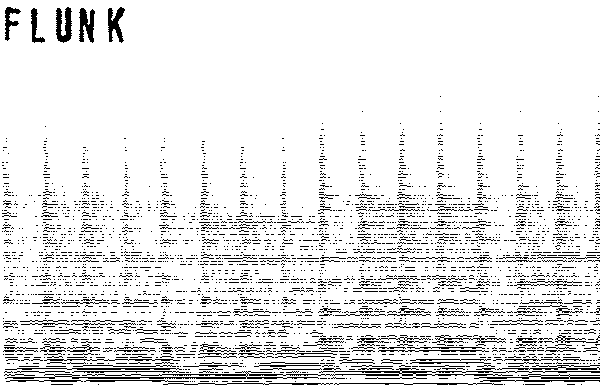
Peeping a bit closer, these instructions take shape. the long black strip is a spectrogram encoding of Flunk's song. For a closeup of the decoding instructions for the discs, see the Instructions section.
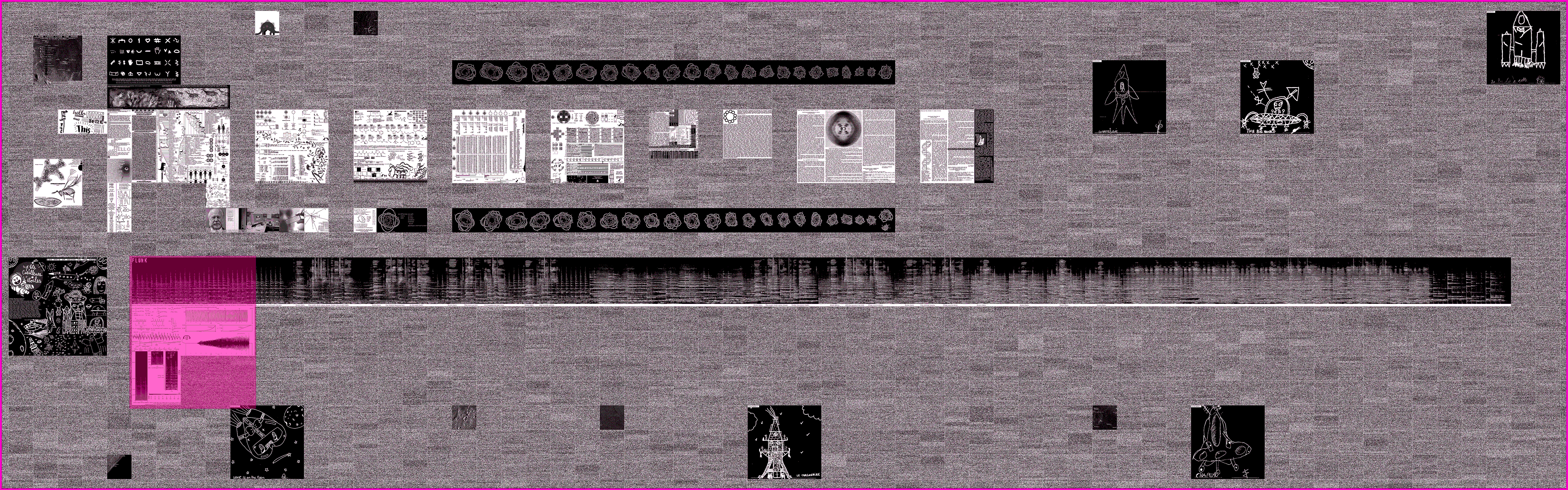
music for space
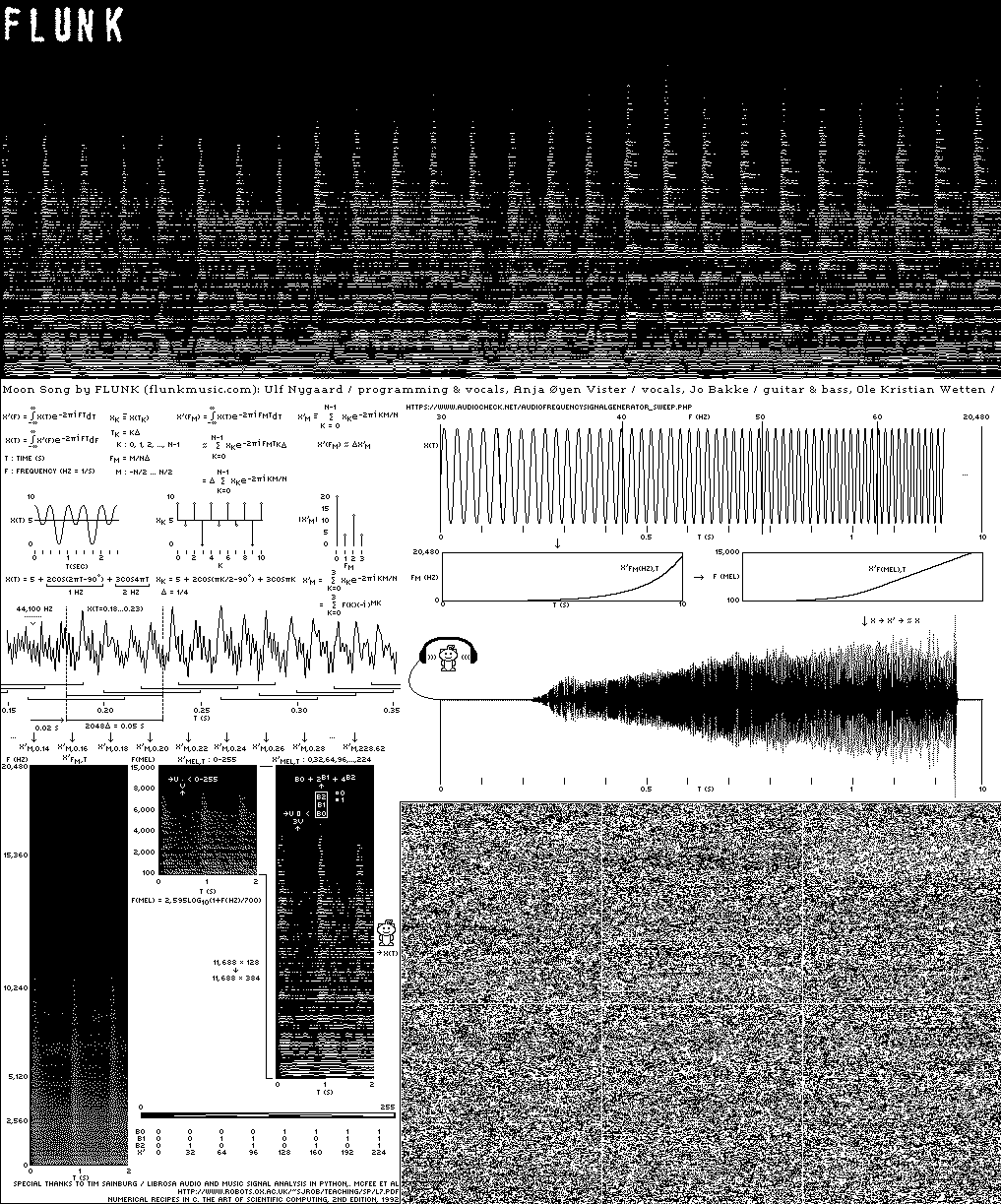
Flunk's song is encoded using 128 mel 3-bit spectrogram. This takes 11,688 × 384 1-bit pixels on the discs. For details see the Sonogram section.
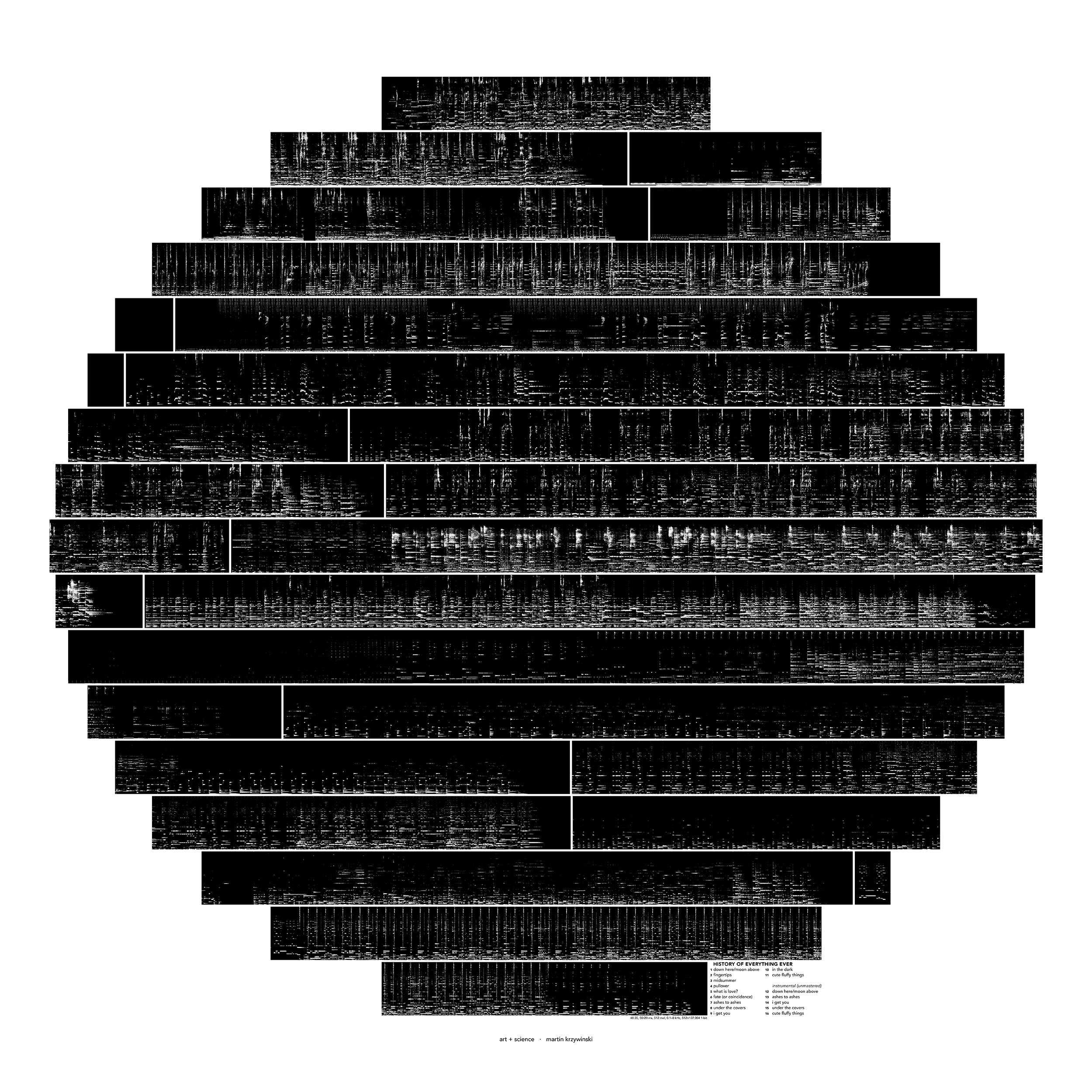
poster for space
A 512 mel 1-bit encoding of the full History of Everything Ever album. Great for your wall or Moon patch.
Consequences of missing data
Either I've been missing something or nothing has been going on. —Karen Elizabeth Gordon
Missing data are everywhere. Subjects may decline to participate in a survey or fail to answer sensitive questions. A cell culture might fail due to contamination. Instrument failures or mishandling of a sample may lead to missing observations. But why are missing data a problem?
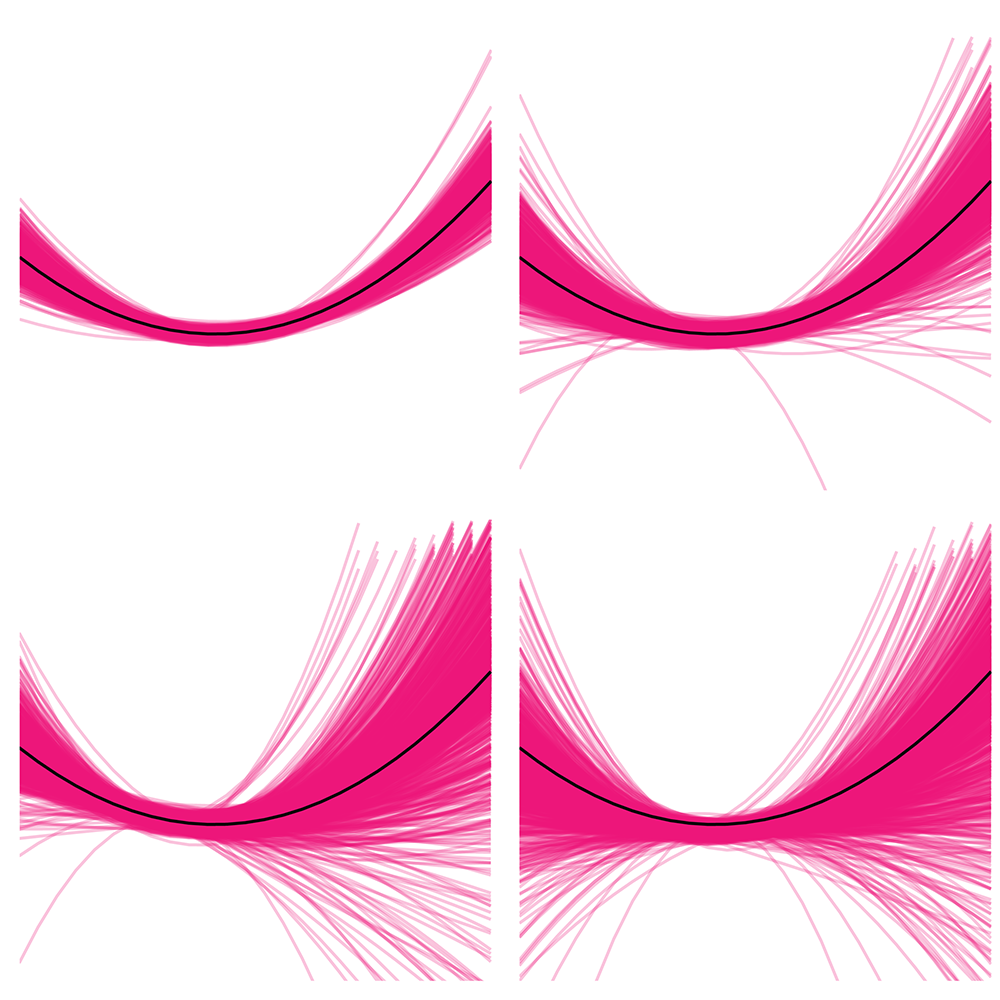
This month, we begin a series of articles about practical and statistical aspects of missing data. We'll see that missing data can increase variability and introduce bias and we will ask whether anything can be done to mitigate these consequences. It turns out that, in the case where we know nothing about the missing subjects, no mitigation is possible. We must accept higher variability and, if we have a suspicion that the missing subjects aren’t completely random, possible bias as well.
Tanujit Dey, T., Lipsitz, S.R., Fitzmaurice, G., Krzywinski, M. & Altman, N. (2026) Points of significance: Consequences of missing data. Nat. Methods 23:1661–1663.
Double Robustness
It is not certain that everything is uncertain. —Blaise Pascal
We have already explored how we can mitigate bias caused by confounding variables in observational studies using propensity score (PS) matching (PSM) and propensity score weighting (PSW). However, any statistical model is only as good as its assumptions and, if it is specified incorrectly, it can itself produce biased estimates of the treatment effect.
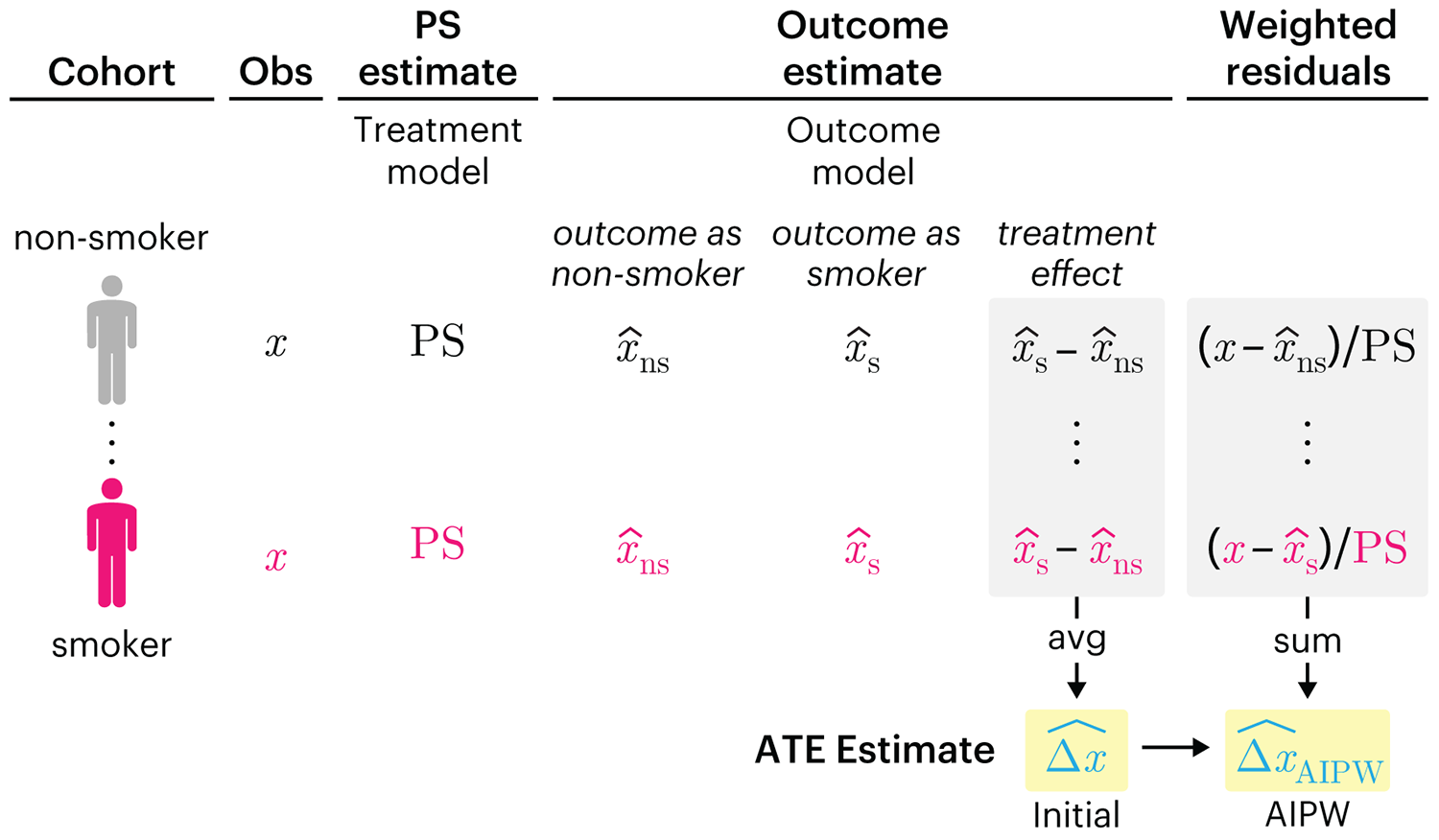
This month, we explore double robustness, a powerful statistical concept that provides a valuable “safety net” against the risk of an incorrect model. It offers two opportunities, instead of just one, to obtain a valid estimate of the treatment effect — making it possible to draw credible causal inferences from observational data without having to depend on a single set of modeling assumptions.
Kurz, C.F., Krzywinski, M. & Altman, N. (2026) Points of significance: Double Robustness. Nat. Methods 23:868–869.
Nature Biotechnology cover
My cover design on the 7 April 2026 Nature Biotechnology issue shows the dendrogram that represents a cluster of uniquely expressed (or downregulated) genes in human naive stem cells induced from such cells. Within each dendrogram block, the genomic barcode sequence (sampled from Supplementary Table 1) is depicted with a Code 39 barcode. The highlighted barcode is one of those used for cell isolation.
Ishiguro S. et al. A multi-kingdom genetic barcoding system for precise clone isolation (2026) Nature Biotechnology 44:616–629.

Browse my gallery of cover designs.
Happy 2026 π Day—
Art for the 5%
Celebrate π Day (March 14th) and enjoy the art — but only if you're part of the 5%.
Go ahead, see what you can't see.

Ishihara's Tests for Colour Deficiency
Authentic and accurate images of Ishihara's test plates photographed (and lovingly color-corrected) from the 38-plate Ishihara's Tests for Colour Deficiency.
I also provide the position, size, and color of each circle on each test plate.


Symmetric alternatives to the ordinary least squares regression
What immortal hand or eye, could frame thy fearful symmetry? — William Blake, "The Tyger"
This month, we look at symmetric regression, which, unlike simple linear regression, it is reversible — remaining unaltered when the variables are swapped.
Simple linear regression can summarize the linear relationship between two variables `X` and `Y` — for example, when `Y` is considered the response (dependent) and `X` the predictor (independent) variable.
However, there are times when we are not interested (or able) to distinguish between dependent and independent variables — either because they have the same importance or the same role. This is where symmetric regression can help.

Luca Greco, George Luta, Martin Krzywinski & Naomi Altman (2025) Points of significance: Symmetric alternatives to the ordinary least squares regression. Nat. Methods 22:1610–1612.